
Choosing Your Focus ~ Finding Inspiration (part 2)
On exploring different forms of focus and what they might reveal
Dear wonderous one, what first pops into your mind when I mention “focus”?
Do you instantly associate it with interests (expertise, topic…), attention (ie. mental concentration and mindset), or creation (visuals, narration…)? Perhaps something else I’ve forgotten prepping for today’s letter. 😅
Each can help us navigate the complexities of daily life and find inspiration but the one I’ve been wondering about most lately is creative focus, so I’d love to share what I’ve learned and applied around that with you today.
In this week’s letter, you’ll find:
💗 The unexpected ideas and revelations that adjusting your focus can activate (and artists inspiring me to not play it so ‘classic’ with mine)
🖼️ Playing around with other focusing styles in my own art projects
😌 A related mindful + creative invitation to try out this weekend
As always, if you’re feeling extra low on time or brain space, feel free to skip to the section you’re most drawn to right now. 😊
1. Where might different types of focus lead you?
1.1 / I like to think of focus as sliding scales
Narrow to wide
Sharp to soft (blurry)
Internal to external
Single to multiple
Static to moving
…
Wherever you end up landing on each of those (and the ones I’ve accidentally forgotten) implies a choice, intentional or not, of what to leave IN, whether that’s front and center or towards the back, and what to leave OUT.
1.2 / Paying attention vs. letting your mind wander
I am on a quest to reclaim my attention, frustrated by how much harder it is for me to start and stay on task nowadays than in my university days, so I’ll probably explore that further with you soon!
For now, what I’ve found most helpful is:
Mindfulness practices to be more aware of what’s going on within and around me, and leaning into WONDER. Hence why that’s a huge part of what I talk about in these weekly letters, and include practice invitations at the end of each one.
Co-working with others, IRL or online, in the spirit of ‘Body Doubling’, a concept I learned about from several friends with ADHD. I may not share their diagnosis but it sure is helpful when I can’t get into the flow working or creating home.
Setting better boundaries with my phone, and other screens. Relearning how to be comfortable with boredom and digital disconnection is a much greater challenge than I imagined. But the quest continues!
1.3 / Playing with focus in writings
While my mind goes to visual arts first (more on that next), I’m also curious about focus in writings. I’m sure there would be plenty to say on it in music, dance, and other art forms too but I know those even less so I’ll leave that open to you to tell me about or research for yourself if you’d like.
Right now, I’ve almost finished 📖 M Train: A Memoir by icon extraordinaire Patti Smith (whose Substack is FANTASTIC!). Her way of weaving words, thoughts, time periods, emotions, places together is truly wonderful to soak in. It feels like following a brilliant stream of consciousness, with the frequent changes in focus, except it’s so very connected in a subtle way. Weaving really is the best way I can think to describe it.
“I’m sure I could write endlessly about nothing. If only I had nothing to say.” ― Patti Smith, M Train: A Memoir
That then reminded me of Insomnia by Marina Benjamin which IS a stream of consciousness set of essays, where the thread of connection, the overall focus is on the disconnected, surreal feeling of insomnia. I’ve thought about this book often since I read it a few years ago.
And from there, my mind wandered back to Kazuo Ishiguro’s short fiction collection Nocturnes: Five Stories of Music and Nightfall. Here the focus is so very narrow in time, giving us glimpses into moments of people’s lives at moments of ‘reckoning’. Without the resolution, wrapped in a bow, Western literature so often favors. It felt almost photographic in its ‘snapshot’ feeling.
Three examples of books that linger in my mind because of how they play with focus, among so many other things, at both the linguistic level and narrative one. Three among countless more we could learn from to shake up our own storytelling ideas.
1.4 / Playing with focus in visual art
Let’s take a look at narrow vs. wide and sharp vs. soft focuses in action, in terms of creative subject matter and how it’s then expressed as art, with a few examples of artists I admire:
The semi-abstract compositions of Saul Leiter and Uta Barth’s photographs and their invitation to ‘SEE’ differently, along with François Halard’s painted polaroids ‘In Conversation with Claude’ (←Monet)
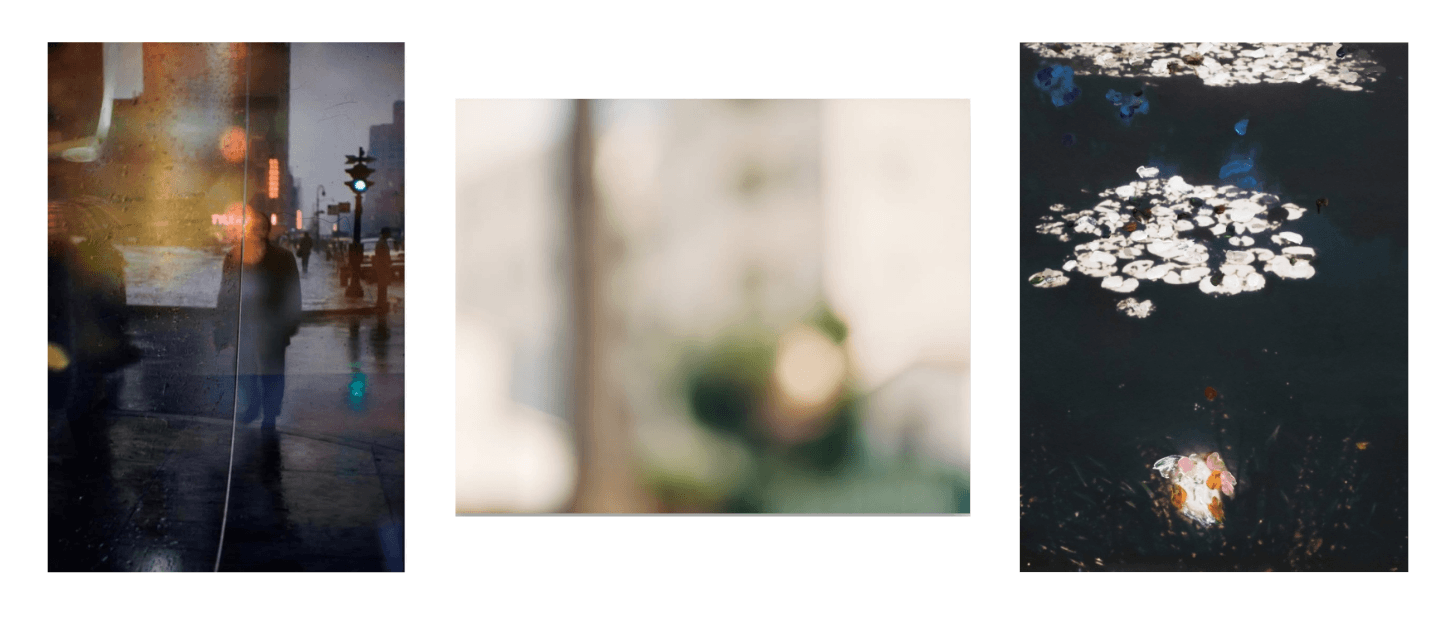
“In most images the subject of the photograph and the meaning are one and the same. I wanted to challenge that. The question for me is how can I make you aware of your own looking, instead of losing your attention to thoughts about what it is that you are looking at.” - Uta Barth
“I like it when one is not certain what one sees. When we do not know why the photographer has taken a picture and when we do not know why we are looking at it, all of a sudden we discover something that we start seeing. I like this confusion.” - Saul Leiter
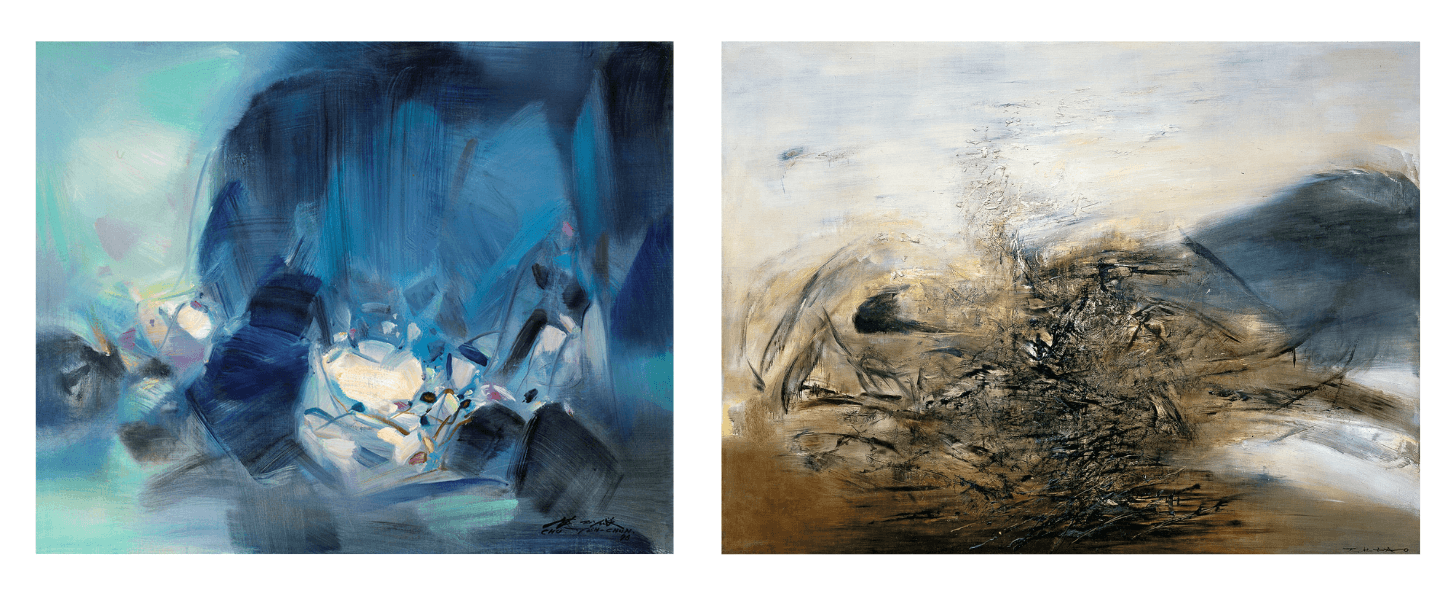
The Abstract Lyrical Paintings by Zao Wou-Ki and Chu Teh-Chun, or how to lean even further into ABSTRACTION
I came across these two artists’ creations during an abstract lyrical painting weekend workshop last April. I had no idea what I was getting into but I was intrigued by this type of painting and how I could learn to lean even more into abstraction. Turns out it did not come naturally to me, but a fascinating lesson in navigating light and shadow, shape and color, alternating brush strokes to maintain the abstraction while still having a focal point, if not always clear at first glance.
Here’s the evolution of my own abstract lyrical painting (including a photo of 6ft tall me beside it for context as to it’s jumbo size):
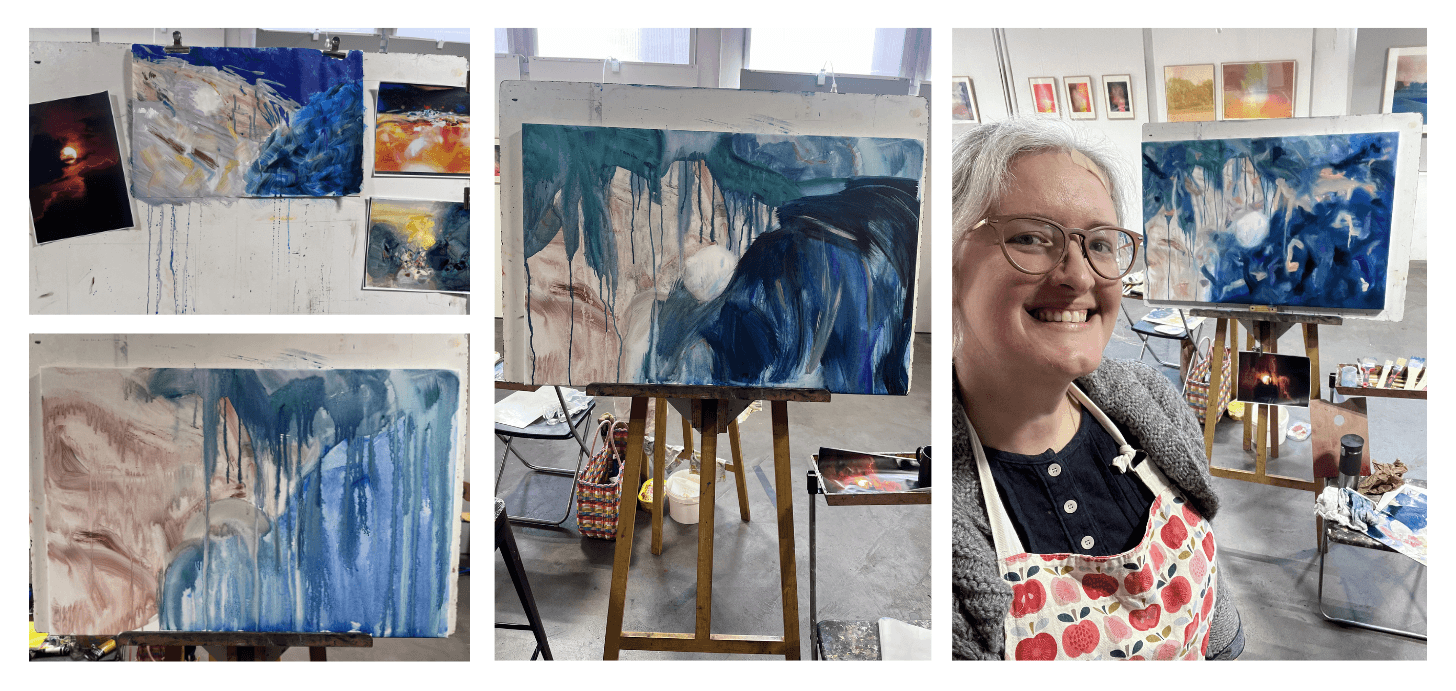
I think you can definitely notice their influences on my creation. My tendency would be towards the softer shapes and colors of Chu Teh Chun’s Doux Avenir (Gentle Future) rather than Zao Wou Ki’s sharper brush strokes and more intense color pairings in his nod to late composer Edgar Varèse but both have such fascinating dynamism and yes, lyricism, in them that I drew from them more than the other painters we were shown in that workshop.
1.5 / Finding your own focus
Speaking of that painting, that light, somewhat face-like sphere came about accidentally (or subconsciously). The workshop teacher told me it was too ‘figurative’ for the style we were emulating and to break up the shape. I did… then decided to add it back. At the end of the day, I wanted to have something I loved, whether it fit perfectly into what abstract lyricism is or not.
→ Inspiration and guidelines are a great starting off point but in the goal is to find our own [voice / balance / vision / focus] in art and in life, right? 😊
2. Applying this to my own creative projects: bring on the BLUR!
Ok, you could argue I already have quite a few focuses when it comes to art.
In terms of mediums, I alternate between photography and ceramics, but also drawing, painting, and now collaging. Oh and poetry, even some attempts at short stories… It just depends on my mood and what I’d like to make. Or if I see a cool workshop that makes me go ‘Ooohh that could be fun!’ 🤣 (cut to me suddenly trying to figure out how to become a linocutting expert by this Summer).
Then within each art form, you can split it down further: sculptures vs. pottery, digital vs. analog photography, etc. This variety actually helps me stay inspired, keeping art feeling like PLAY rather than WORK.
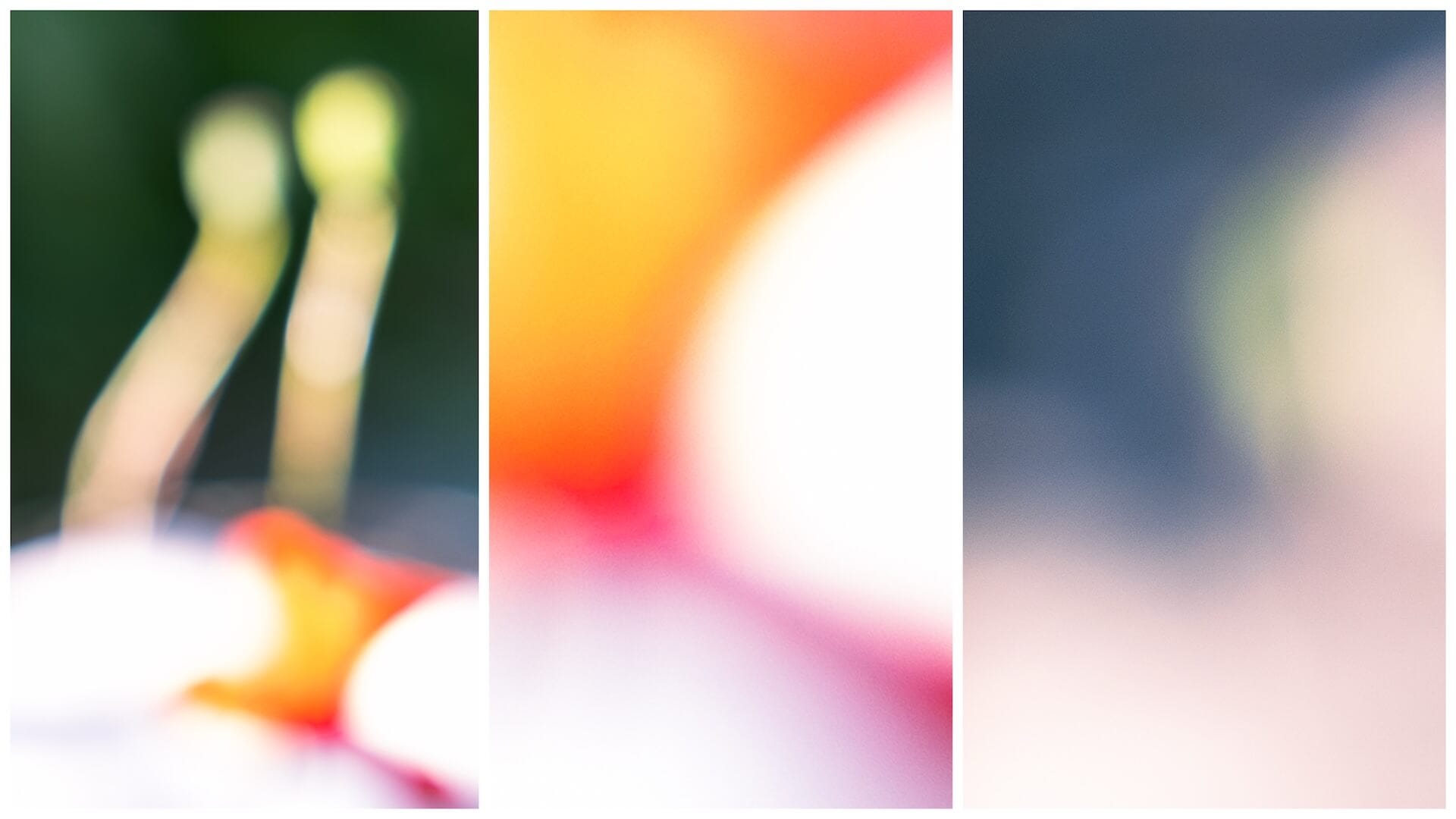
Lately, however, I’ve been feeling an urge to play around with narrowing and softening my focus, especially when it comes to photography. Intensified by realizing that most of what I create has a poetic, contemplative vibe to it… yet all too often my photographs stay more surface level than I’d like. I want to go DEEPER into inviting you into contemplation. Making more space for your own interpretations and connections, not just my own. To weave with memories. Dreams. Possibilities. Nostalgia. Romanticism.
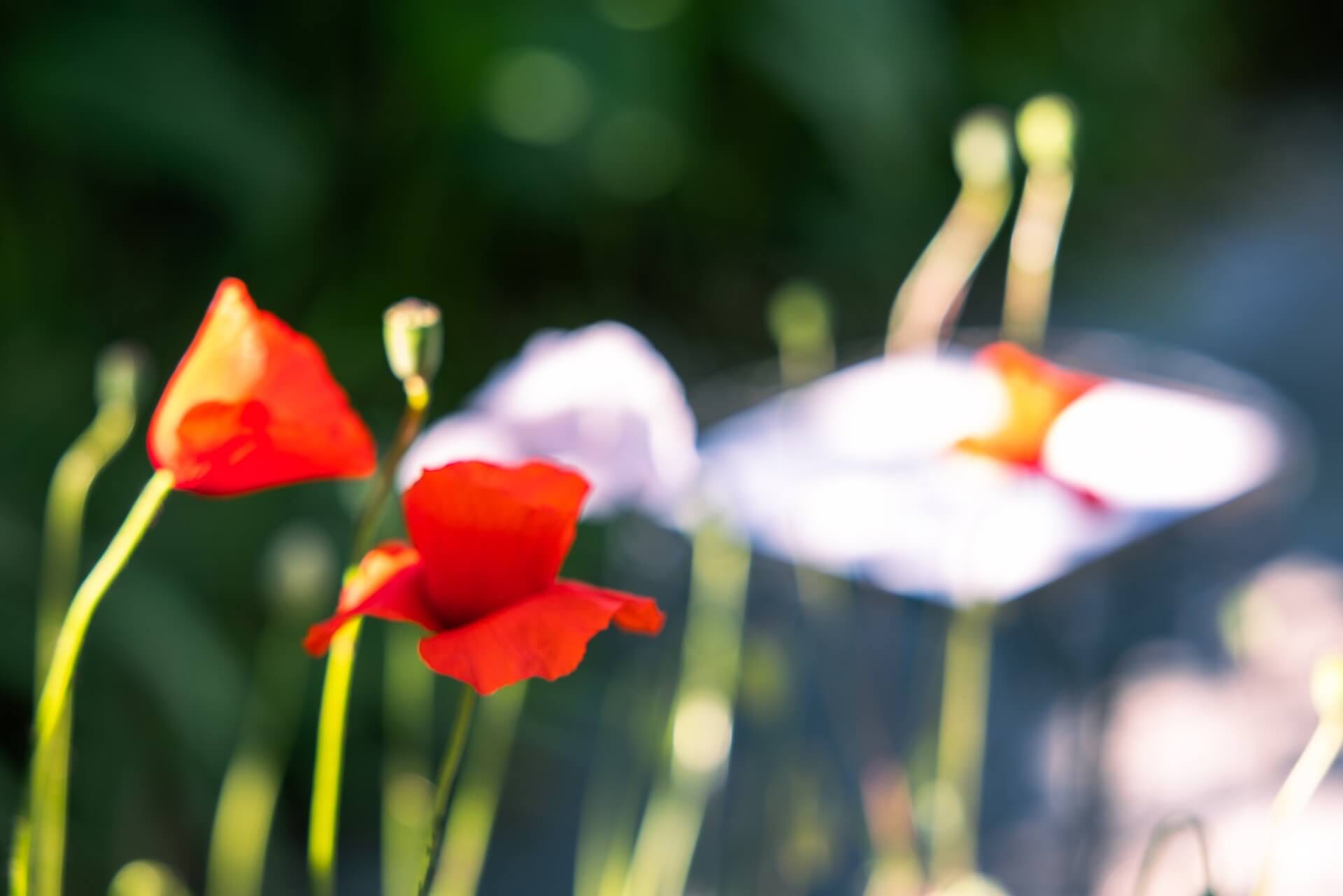
Here’s an example of these recent explorations, made by zooming waaaay in to that already soft-focused photo that’s at the start of this letter. I sense something very different, yet intertwined, in each one… but the better question is: what do YOU see and feel in them?
Next ideas to play around with focus?
More intentional blur (combined with camera movement, using slower shutter speeds) in photos.
Trying my hand at more abstract painting again, because I have a bunch of paints and another huge canvas (plus a few smaller ones) waiting to be transformed.
Practicing more ‘realistic’ drawings, mostly to help me with proportions when planing out ceramics projects, but also because I’d like to feel more confident in my drawing skills.
Seeing how I could widen/narrow, soften/sharpen my focus when it comes to writing poetry.
Also: I too would like to create dialogues with and hommages of some of my favorite artists like François Halard and Zao Wou-Ki. Who to start with… 🤔
Got any other suggestions for me or focus-explorations of your own? Please share them with me (via email or in a comment, depending on where you’re reading this) 🥰 I’m always looking for more ideas. Even if I should probably follow through on more of the ones I’ve already started… 🙃
3. Your self-care invitation for this weekend
😌 Going on a gentle focus journey with your senses:
Choose one of your senses and see what you can perceive around you. Let that sense narrow and widen, sharpen and soften, as far as you can go for a few minutes.
Some reflection questions you could explore during or after that:
What can you notice while doing that, that was flying under your radar?
How do your mind and body react along the way? Is there one form of focus that feels more comfortable? One you find yourself struggling with? If so, why might that be?
What ideas, emotions, sensations, memories does this practice bring up?
My favorite sense for this is sight because I’m a very visual thinker AND spend far too much time on screens so it feels soothing to focus these eyeballs elsewhere for a bit, but feel free to choose another sense, or several!
🎨 For a creative twist:
Take your artistic form of choice or, for an added inspirational challenge, one you don’t usually reach for.
Think about what you’d usually focus on and how you could switch things up, drawing on your sensory journey mentioned above. The shift could be as subtle or drastic as you’d like.
For instance: if you usually draw realistic portraits, you could try narrowing in on a specific facial feature instead, widening out to depict a dynamic street scene, or softening into an abstract sketch.
If you give that a try, feel free to share what the experience was like for you and what you created from it with me. I’d love to know!
💖
Wishing you a wonder-filled weekend and see you next Friday (when I’ll be on my way to Normandy for a long weekend adventure with one of my besties)
~ Claire